
Phase overview: Networking
Your map of the Networking phase: the overlay network, peer discovery, and message relaying, in three modules.
Introduction
≈2 min · Phase overview · read this before diving in
A node alone is a database; a network of nodes is a ledger. This short, dense phase covers how rippled nodes find each other, connect, and keep messages flowing without drowning in duplicates.
The overlay network module lays out rippled's own network layer on top of TCP and TLS: connection states, message routing, and why naive broadcast melts down. Peer discovery covers how a fresh node bootstraps into the mesh and manages its connection slots. Handshake and message relaying then watches real traffic: the HTTP Upgrade handshake you met in the cryptography phase, and the relaying, duplicate suppression, and squelching that keep a global network's bandwidth sane.
The road through this phase
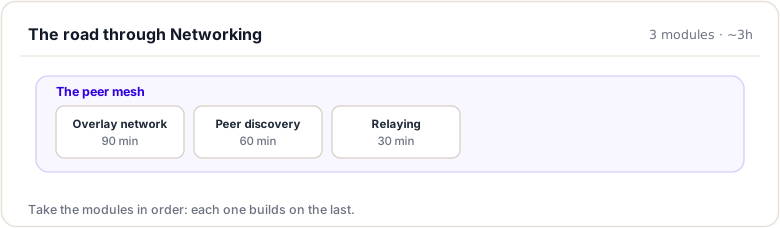
| Module | Duration | What it covers |
|---|---|---|
| The peer mesh | ||
| The overlay network | 90 min | rippled's peer-to-peer overlay — mesh topology, connection types and the OverlayImpl / PeerImp architecture |
| Peer discovery & connection lifecycle | 60 min | How nodes find peers (config, DNS, gossip, crawler) and the lifecycle of a peer connection |
| Handshake & message relaying | 30 min | The protocol handshake and how messages (proposals, validations, transactions) are relayed and squelched — ... |
Total: about 3 hours of module time, plus your own exploration. The modules are ordered so each builds on the previous one; resist the temptation to skip ahead.
Where you will land
By the end of this phase you can explain how a brand-new node ends up with healthy peers, read the overlay code that routes a proposal across the world, and diagnose the classic connectivity problems. With messages flowing, the next phase looks at who is allowed to ask the node questions: the RPC layer.