
Consensus lifecycle & phases
A consensus round in detail — modes, phases (open / establish / accepted) and timing.
What you'll learn
- Walk a round through the open, establish and accepted phases.
- Explain ConsensusMode (Proposing / Observing / WrongLedger…).
- Understand the timing parameters and close conditions.
Introduction
≈90 min · Advanced · builds on Consensus fundamentals
Now let's watch a single consensus round unfold in detail. In this module you'll walk it through its phases (open, establish, accepted) and learn the ConsensusMode states (proposing, observing, wrong-ledger…) and the timing that governs when a ledger closes. It's consensus in motion, step by step.
High-Level Flow
In brief: one consensus round from start to a validated ledger, at a glance.
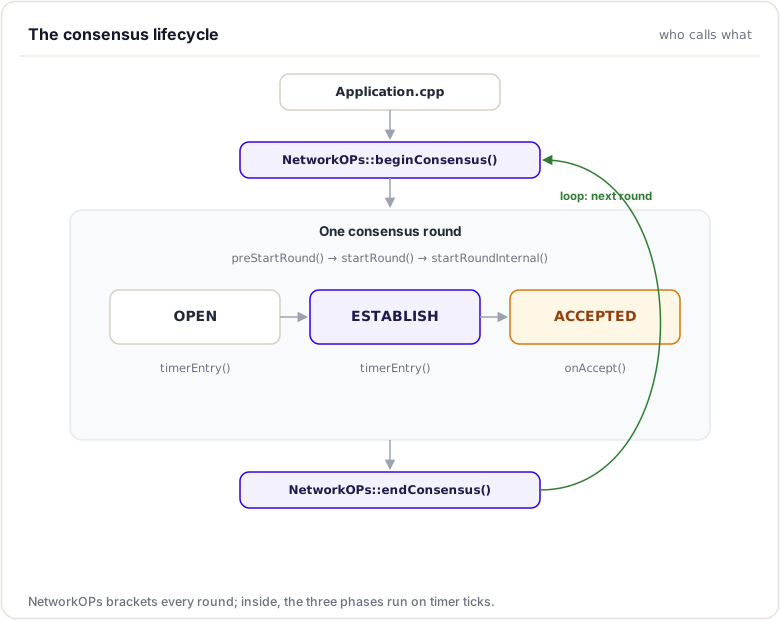
Key idea. A round moves through open, establish, and accepted. The
ConsensusMode(proposing, observing, wrong-ledger) tells you what part your node is playing at any moment.
Stage 1: Initiating Consensus
Entry Point: Application.cpp
Consensus begins at application startup:
// Application.cpp line 1385
// Start first consensus round
if (!m_networkOPs->beginConsensus(
        m_ledgerMaster->getClosedLedger()->header().hash, {}))
{
    JLOG(m_journal.fatal()) << "Unable to start consensus";
    return false;
}
Key Actions:
- Passes the hash of the last closed ledger
- NetworkOPs coordinates the consensus initiation
- Failure to start consensus is fatal
Stage 2: Pre-Start Preparation
Function: RCLConsensus::Adaptor::preStartRound
Before a round begins, the system prepares:
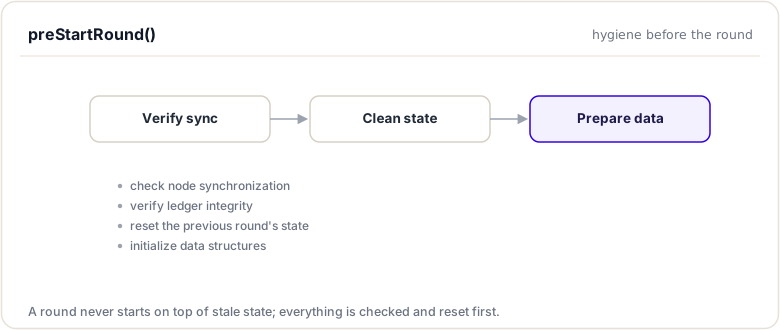
Checks Performed:
- Is the node synchronized with the network?
- Is the previous ledger valid and complete?
- Are all required data structures ready?
Stage 3: Starting the Round
Function: Consensus::startRound
This function establishes the round parameters:
void startRound(
      NetClock::time_point const& now,
      typename Ledger_t::ID const& prevLedgerID,
      Ledger_t prevLedger,
      hash_set<NodeID_t> const& nowUntrusted,
      hash_set<NodeID_t> const& nowTrusted)
  {
      // Adaptor determines if we should propose
      bool proposing = adaptor_.preStartRound(prevLedger, nowTrusted);

      // Set initial mode
      ConsensusMode mode = proposing ?
          ConsensusMode::Proposing : ConsensusMode::Observing;

      // Enter internal initialization
      startRoundInternal(now, prevLedgerID, prevLedger, mode, clog);
  }
Parameters Established:
- Previous ledger hash and object
- Initial mode (proposing or observing)
- Timer initialization
- Peer position tracking
Stage 4: Open Phase
In brief: transactions accumulate in the open ledger before it closes.
Function: Consensus::startRoundInternal → ConsensusPhase::Open
Key Timing Parameters:
| Parameter | Value | Purpose |
|---|---|---|
| ledgerIdleInterval | 15s | Max time ledger stays open with no transactions |
| ledgerMinClose | 2s | Minimum time ledger must stay open |
| prevRoundTime/2 | Dynamic | Must stay open ≥ half of previous consensus time |
| proposeFRESHNESS | 20s | How long peer proposals remain valid |
| proposeINTERVAL | 12s | How often we must refresh our proposal |
The ledger opens to accept transactions:
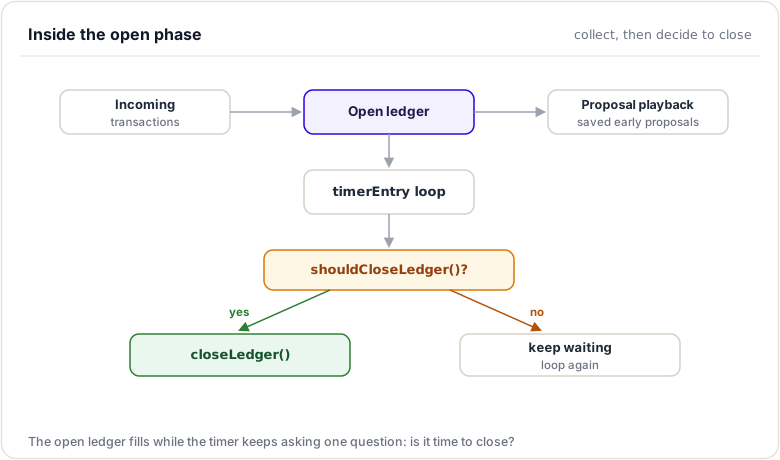
Key Activities:
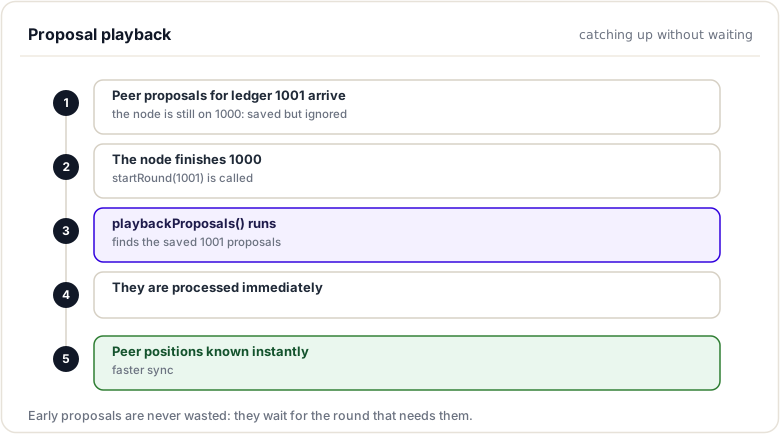
playbackProposals():
- Replays peer proposals received for this ledger that arrived early
- Recovers proposals from up to 10 recent proposals per peer
- Filters by prevLedgerID to find relevant proposals
- Allows fast catch-up when switching ledgers
Example:
timerEntry() in open phase:
- Called periodically (~1 second via ledgerGRANULARITY)
- Evaluates close conditions via
checkLedger() - Calls
shouldCloseLedger()to determine if ledger should close
Example:
t=0s:  Open phase starts
t=1s:  timerEntry() → shouldCloseLedger() → NO (too early)
t=2s:  timerEntry() → shouldCloseLedger() → YES (conditions met)
 └─ closeLedger() → phase = ESTABLISH
Close conditions checked:
- Minimum time elapsed (2s)
- Has transactions OR idle timeout
- Not opening too fast (≥ prevRoundTime/2)
- Enough peers have closed
Stage 5: Close Decision
Function: shouldCloseLedger
Determines if the ledger should close:
  // Key logic from shouldCloseLedger() in Consensus.cpp

  // If majority of peers already closed, follow them
  if ((proposersClosed + proposersValidated) > (prevProposers / 2)) {
      JLOG(j.trace()) << "Others have closed";
      return true;  // Close with the network
  }

  // No transactions? Only close after idle interval
  if (!anyTransactions) {
      return timeSincePrevClose >= idleInterval;  // Default 15s
  }

  // Enforce minimum ledger open time
  if (openTime < parms.ledgerMinClose) {  // 2 seconds
      JLOG(j.debug()) << "Must wait minimum time before closing";
      return false;
  }

  // Don't close faster than half the previous consensus time
  // (allows slower validators to keep up)
  if (openTime < (prevRoundTime / 2)) {
      JLOG(j.debug()) << "Ledger has not been open long enough";
      return false;
  }

  return true;  // All conditions met
Close Decision Process:
Step 1: Safety Checks
- If timing is unusual (prevRoundTime or timeSincePrevClose out of range) → CLOSE immediately
Step 2: Network Coordination
- If (proposersClosed + proposersValidated) > prevProposers/2 → CLOSE (follow majority)
Step 3: Transaction-Based Decision
Path A: No Transactions
- Close only if: timeSincePrevClose ≥ ledgerIdleInterval (15s)
- Purpose: Maintain regular ledger cadence even when idle
Path B: Has Transactions
- Must satisfy: openTime ≥ ledgerMinClose (2s)
- Must satisfy: openTime ≥ prevRoundTime/2
- If both pass → CLOSE
Key Parameters:
| Parameter | Value | Purpose |
|---|---|---|
| ledgerMinClose | 2s | Minimum time ledger must stay open |
| ledgerIdleInterval | 15s | Maximum idle time before forcing close |
| prevRoundTime/2 | Dynamic | Throttle: ledger must stay open ≥ half of previous round time |
Stage 6: Closing the Ledger
Function: Consensus::closeLedger
Transitions from open to establish phase:
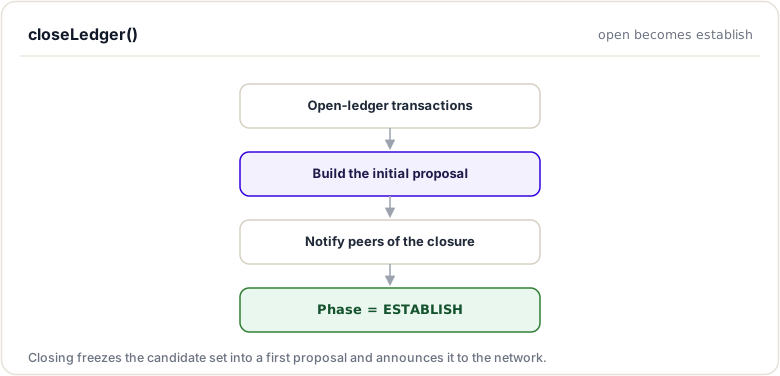
Actions:
- Finalizes transaction set for the ledger
- Creates initial consensus proposal
- Broadcasts closure to peers
- Transitions to establish phase
Stage 7: Establish Phase
In brief: nodes converge their transaction sets until they agree.
Function: Consensus::phaseEstablish
Key Timing Parameters:
| Parameter | Value | Purpose |
|---|---|---|
| ledgerMinConsensus | 1.95s | Minimum time before consensus can be declared |
| ledgerMaxConsensus | 15s | Maximum time to wait for lagging validators |
| ledgerABANDON_CONSENSUS | 120s | Absolute maximum round time |
| ledgerABANDON_CONSENSUS_FACTOR | 10× | Dynamic abandonment: min(prevTime × 10, 120s) |
| avMIN_CONSENSUS_TIME | 5s | Minimum time used for avalanche calculations |
Avalanche Threshold Progression:
convergePercent = (currentRoundTime × 100) / max(prevRoundTime, avMIN_CONSENSUS_TIME)

Thresholds by state:
  init  (0% time):   50% agreement needed
  mid   (50% time):  65% agreement needed
  late  (85% time):  70% agreement needed
  stuck (200% time): 95% agreement needed

Example: If previous round took 4s, use avMIN_CONSENSUS_TIME (5s)
  At 2.5s: convergePercent = (2500 × 100) / 5000 = 50%
  → Transition from 'init' to 'mid'
  → Threshold increases from 50% to 65%
The core of consensus, exchanging proposals and resolving disputes:
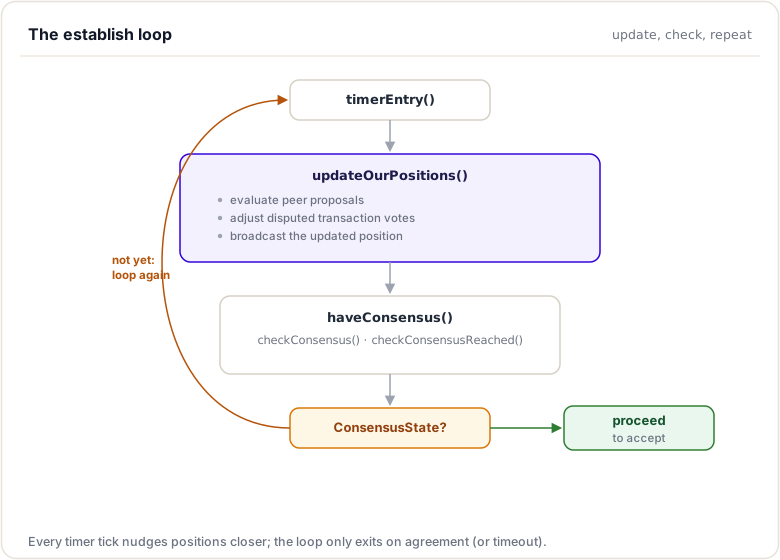
Key Functions:
updateOurPositions():
- Processes peer proposals
- Adjusts votes on disputed transactions
- Updates local candidate transaction set
shouldPause():
- Checks if consensus should pause
- Handles lagging or non-participating peers
- Prevents premature advancement
haveConsensus() → checkConsensus() → checkConsensusReached():
- Evaluates if agreement threshold met
- Considers timing constraints
- Returns consensus state (Yes/No/MovedOn/Expired)
Stage 8: Consensus Checking
Consensus Evaluation Logic:
ConsensusState checkConsensus(
    std::size_t prevProposers,
    std::size_t currentProposers,
    std::size_t currentAgree,
    std::size_t currentFinished,
    std::chrono::milliseconds previousAgreeTime,
    std::chrono::milliseconds currentAgreeTime,
    bool stalled,
    ConsensusParms const& parms,
    bool proposing)
{
    // Check minimum time elapsed
    if (currentAgreeTime <= parms.ledgerMinConsensus)
        return ConsensusState::No;

    // Check if we have reduced participation
    if (currentProposers < prevProposers * 3/4) {
        if (currentAgreeTime < previousAgreeTime + parms.ledgerMinConsensus)
            return ConsensusState::No;
    }

    // Check if we reached 80% agreement on transaction set
    if (checkConsensusReached(
            currentAgree,
            currentProposers,
            proposing,
            parms.minCONSENSUS_PCT,  // Always 80%
            currentAgreeTime > parms.ledgerMaxConsensus,
            stalled))
        return ConsensusState::Yes;

    // Check if 80% of peers moved on without us
    if (checkConsensusReached(
            currentFinished,
            currentProposers,
            false,
            parms.minCONSENSUS_PCT,  // Always 80%
            currentAgreeTime > parms.ledgerMaxConsensus,
            false))
        return ConsensusState::MovedOn;

    // Check if consensus has taken too long
    // Timeout is bounded: min(max(prevTime × 10, 15s), 120s)
    std::chrono::milliseconds const maxAgreeTime =
        previousAgreeTime * parms.ledgerABANDON_CONSENSUS_FACTOR;  // 10

    if (currentAgreeTime > std::clamp(
                               maxAgreeTime,
                               parms.ledgerMaxConsensus,      // 15s minimum
                               parms.ledgerABANDON_CONSENSUS)) // 120s maximum
        return ConsensusState::Expired;

    return ConsensusState::No;
}
Agreement Threshold:
    checkConsensusReached():
      agreement_pct = (agreeing / total) * 100
Required: 80% (fixed - minCONSENSUS_PCT)
This checks if 80% of validators have the SAME complete transaction set (same hash).
Two checks performed:
- Do 80% agree with OUR position? → Yes
- Did 80% move to next ledger? → MovedOn
Important Distinction:
The 80% threshold here is for final consensus (comparing complete transaction set hashes).
This is separate from avalanche voting (50%→65%→70%→95%) which determines which individual transactions to include during updateOurPositions().
Consensus States:
| State | Meaning | Action |
|---|---|---|
| No | Not enough agreement yet | Continue voting |
| Yes | 80%+ agree with us | Accept consensus! |
| MovedOn | 80%+ moved to next ledger | We're behind, catch up |
| Expired | Took too long | Bow out of consensus |
Stage 9: Acceptance
In brief: the agreed ledger is closed and accepted.
Function: RCLConsensus::Adaptor::onAccept
When consensus is reached:
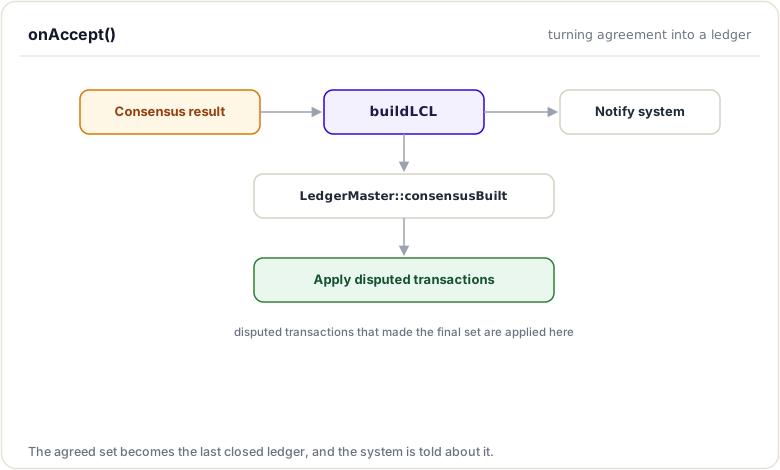
Sub-Functions:
buildLCL():
- Constructs Last Closed Ledger from agreed transactions
- Applies transactions in canonical order
- Produces validated ledger object
LedgerMaster::consensusBuilt():
- Updates system's view of current ledger
- Triggers downstream processing
Apply Disputed Transactions:
- Attempts to apply transactions that weren't included
- Queues for next round if applicable
Stage 10: Final Acceptance
Function: RCLConsensus::Adaptor::doAccept
Finalizes the acceptance process:
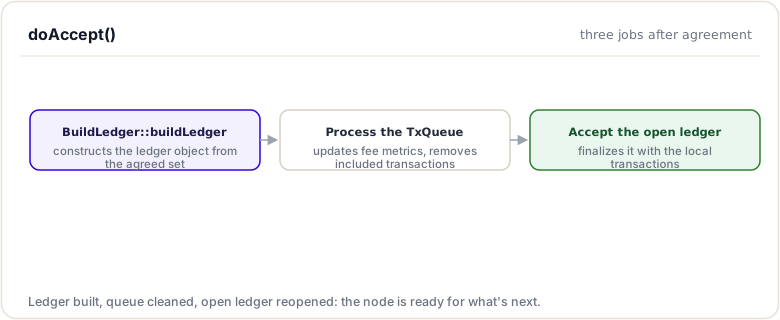
Key Actions:
BuildLedger::buildLedger:
- Final ledger construction
- State persistence
app_.getTxQ().processClosedLedger:
- Updates fee metrics
- Removes included transactions
- Manages deferred transactions
app_.openLedger().accept:
- Applies local transactions not in closed ledger
- Prepares open ledger for next round
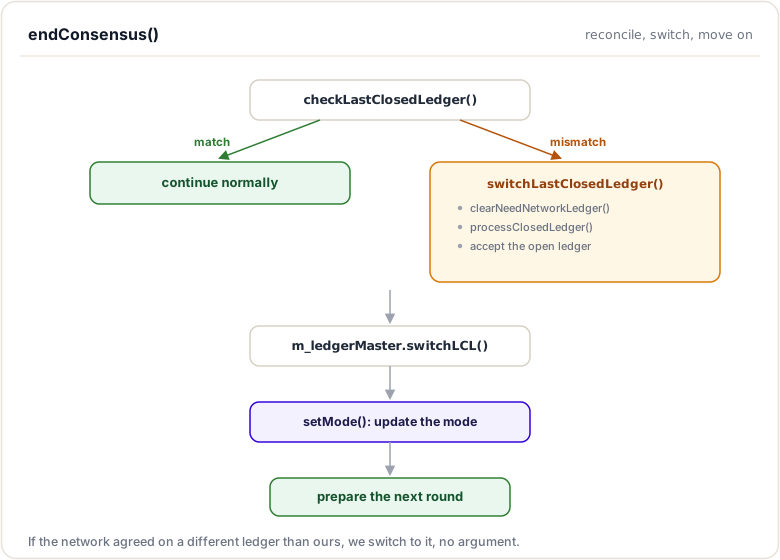
Stage 11: End Consensus
Function: NetworkOPsImp::endConsensus
Completes the round and prepares for the next:
Stage 12: Begin Next Round
Function: NetworkOPsImp::beginConsensus
The cycle continues:
// Begin next consensus round
reportConsensusStateChange();  // Log state change
RCLConsensus::startRound();    // Initialize next round
// Loop back to Stage 2
Complete Lifecycle Diagram
The twelve stages above chain into one continuous cycle: begin consensus, run the open, establish, and accepted phases on timer ticks, end consensus, and immediately begin again. The lifecycle diagram at the top of this module shows the full loop in one picture.
Consensus Modes and Phases
Introduction
The consensus process operates as a state machine with two orthogonal dimensions: the mode (the node's relationship with the network) and the phase (the current stage of the consensus round). Understanding these states is crucial for debugging, monitoring, and developing consensus-related functionality.
This chapter provides a detailed breakdown of each mode and phase, their transitions, and how they affect node behavior.
ConsensusMode: Node Operating States
The ConsensusMode enum defines how a node participates in consensus:
enum class ConsensusMode {
    Proposing,       // Actively proposing positions
    Observing,       // Watching but not proposing
    WrongLedger,     // Out of sync with network
    SwitchedLedger   // Recently switched to different ledger
};
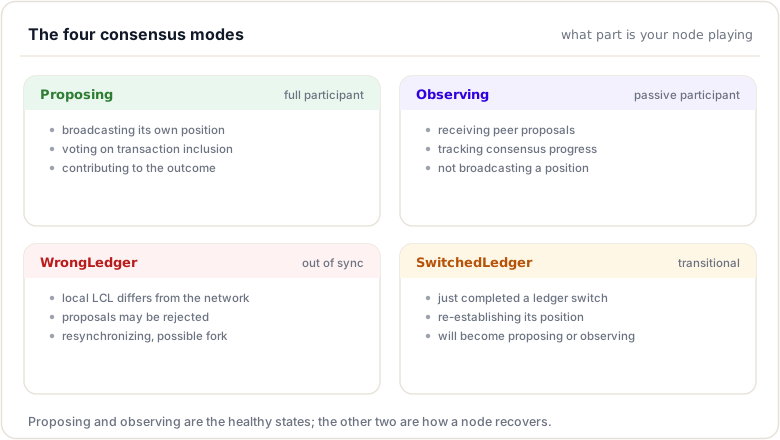
Mode: proposing
Definition: The node is actively participating in consensus by broadcasting proposals.
Requirements for Proposing:
- Node is synchronized with network
- Has valid signing keys configured
- Connected to sufficient peers
- Running on correct ledger chain
Behavior:
- Creates and signs proposals
- Broadcasts position changes
- Participates in dispute resolution
- Contributes to the quorum
Mode: observing
Definition: The node monitors consensus but doesn't submit proposals.
When Observing:
- Node is configured as non-validator
- Insufficient peers for meaningful participation
- Deliberately passive (tracking node)
- Testing or development scenarios
Behavior:
- Collects peer proposals
- Builds local view of consensus
- Applies final ledger when consensus reached
- Does not influence outcome
Mode: WrongLedger
Definition: The node is operating on a different ledger than the network consensus.
Causes:
- Network partition recovery
- Missed ledger closes
- Database corruption or gaps
- Slow synchronization
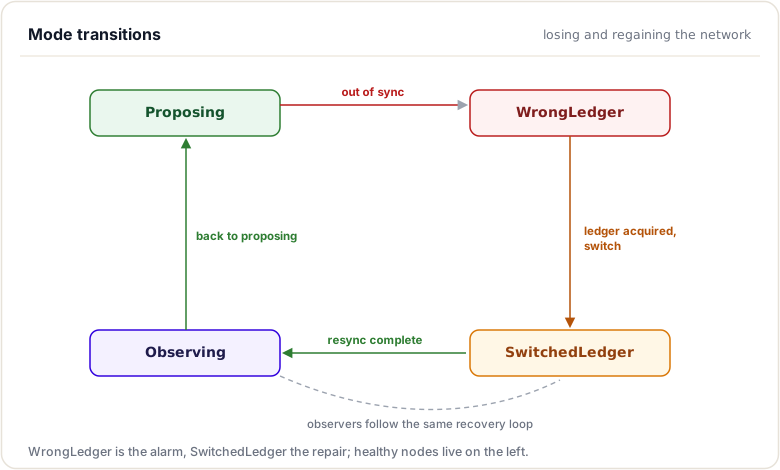
Recovery Actions:
- Acquire correct ledger from peers
- Switch to network's preferred LCL
- Resume normal operation
Mode: SwitchedLedger
Definition: The node recently switched to a different ledger chain.
Behavior:
- Temporary state after correction
- Clears stale proposal data
- Rebuilds peer position tracking
- Transitions to appropriate mode
Mode Transitions
ConsensusPhase: Round Stages
The ConsensusPhase enum defines the current stage within a consensus round:
enum class ConsensusPhase {
    Open,      // Collecting transactions
    Establish, // Exchanging proposals, resolving disputes
    Accepted   // Consensus reached, ledger closed
};
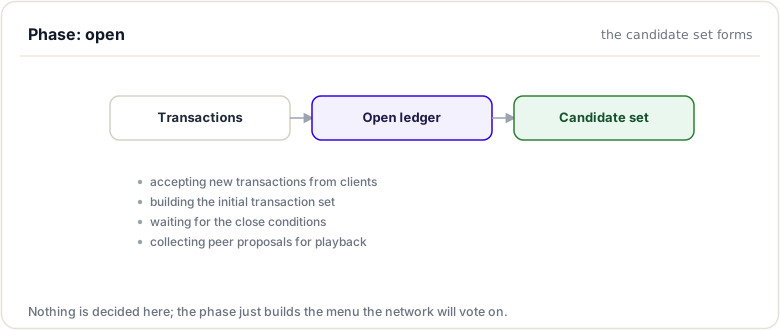
Phase: open
Definition: The ledger is open and accepting new transactions.
Close Conditions:
The open phase continues until specific conditions signal it's time to close the ledger and begin consensus. Multiple conditions are evaluated:
1. Minimum Time Requirement (ledgerMinClose = 2s)
- The ledger must remain open for at least 2 seconds
- This ensures there's sufficient time for transaction propagation across the network
- Prevents ledgers from closing too rapidly, which could exclude valid transactions
- Even if all other conditions are met, the system waits for this minimum duration
2. Transaction Activity or Idle Timeout
- With Transactions: If at least one transaction is present in the open ledger, closure can proceed after minimum time
- Without Transactions: If no transactions arrive, the ledger waits up to 15 seconds (ledgerIdleInterval) before closing
- This dual approach balances responsiveness (closing when there's work) with liveness (preventing indefinite waiting)
- The idle timeout ensures the network continues to produce ledgers even during periods of low activity
3. Speed Limiting (openTime ≥ prevRoundTime/2)
- The current ledger must stay open for at least half the duration of the previous consensus round
- This prevents the network from accelerating too quickly
- Allows slower validators time to participate and stay synchronized
- Example: If the previous round took 6 seconds, the current ledger must stay open for at least 3 seconds
4. Network Coordination (>50% validators closed)
- Alternatively, if more than half of the trusted validators have already closed their ledgers
- The local node will also close to maintain synchronization with the network majority
- This "follow the network" behavior prevents nodes from falling behind
- Helps the network reach consensus even if individual timing conditions vary
Key Functions:
playbackProposals()
- Called at the start of the open phase when beginning a new consensus round
- Handles proposals that arrived early (for future ledgers) before the node was ready
- When the node advances to a new ledger, it replays stored proposals that are now relevant
- Ensures consistency by processing proposals in the correct ledger context
- Prevents loss of consensus information due to timing variations between nodes
- Example: If peer proposals for ledger N+1 arrived while still working on ledger N, they are stored and replayed when entering the open phase for N+1
shouldCloseLedger()
- Called repeatedly during the open phase to check if it's time to close
- Central decision function that evaluates all closure conditions
- Located in
rippled/src/xrpld/consensus/Consensus.cpp - Takes parameters including transaction count, proposer states, and timing information
- Returns
truewhen conditions are met, triggering the transition to establish phase - Implements the logic for all four conditions described above
Timing Characteristics:
The open phase duration varies based on network conditions:
Typical Duration: 2-15 seconds
- In normal operation with steady transaction flow: 2-5 seconds
- During low activity periods: can extend to the full 15-second idle timeout
- The actual duration depends on transaction arrival patterns and network consensus
Minimum Duration: 2 seconds (ledgerMinClose)
- Absolute floor for any ledger's open phase
- Cannot be shortened regardless of other conditions
- Ensures network-wide coordination time
Maximum Idle Duration: 15 seconds (ledgerIdleInterval)
- When no transactions are present, the ledger will close after this timeout
- Prevents the network from stalling during quiet periods
- Guarantees regular ledger progression for time-sensitive operations
Phase: establish
Definition: Proposals are being exchanged and disputes are being resolved.
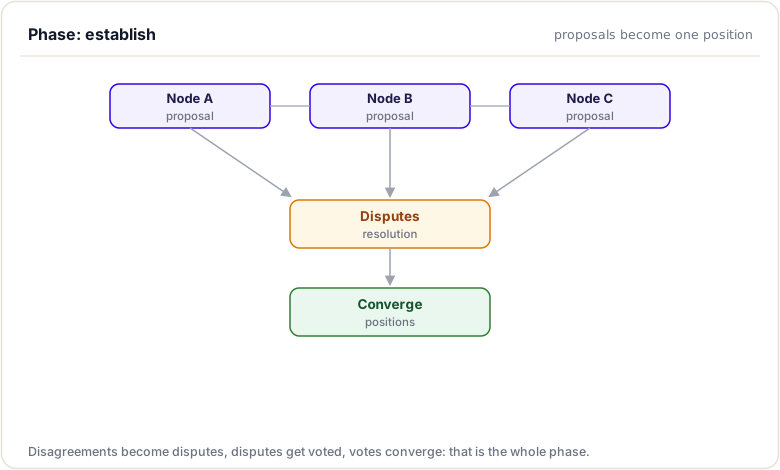
Activities:
- Exchange positions with peers
- Identify disputed transactions
- Vote on inclusion/exclusion
- Update local position based on peer input
- Check for consensus achievement
Timing:
- Minimum duration: ledgerMinConsensus (1.95s) - must wait at least this long before consensus can be declared
- Maximum duration: ledgerMaxConsensus (15s) - max time to pause for laggards
- Check interval: ledgerGRANULARITY (1s) - how often state is checked and positions updated
- Abandonment: ledgerABANDON_CONSENSUS (120s) - absolute maximum before giving up
- Typical duration: 2-10 seconds in healthy network conditions
Avalanche Thresholds:
As time progresses through the establish phase, the threshold for including disputed transactions increases:
| State | Time Threshold | Agreement Required | Purpose |
|---|---|---|---|
| init | 0% of prevRoundTime | 50% | Initial voting - easy to add transactions |
| mid | 50% of prevRoundTime | 65% | Mid-consensus - slightly harder |
| late | 85% of prevRoundTime | 70% | Late consensus - harder still |
| stuck | 200% of prevRoundTime | 95% | Stuck - very hard to change |
The time percentage is calculated as:
convergePercent = (currentRoundTime × 100) / max(prevRoundTime, avMIN_CONSENSUS_TIME)
currentRoundTime
- How long the current consensus round has been running (in milliseconds)
- Starts at 0 when entering establish phase
- Increases continuously as the round progresses
prevRoundTime
- How long the previous consensus round took to complete
- Used as the baseline for "expected" duration
- Assumption: current round should take similar time
avMIN_CONSENSUS_TIME
- Minimum consensus time = 5 seconds (from ConsensusParms.h)
- Safety floor to prevent using very short previous rounds as baseline
- Ensures all avalanche states have time to activate
max(prevRoundTime, avMIN_CONSENSUS_TIME)
- Use whichever is larger: previous round time OR 5 seconds
- Prevents baseline from being too short
This rising threshold forces the network to converge on a stable transaction set.
Key Functions:
updateOurPositions(): Adjusts local votes based on peer inputhaveConsensus(): Checks if agreement threshold reachedcreateDisputes(): Identifies transactions with disagreement
Phase: accepted
Definition: Consensus has been reached and the ledger is being finalized.
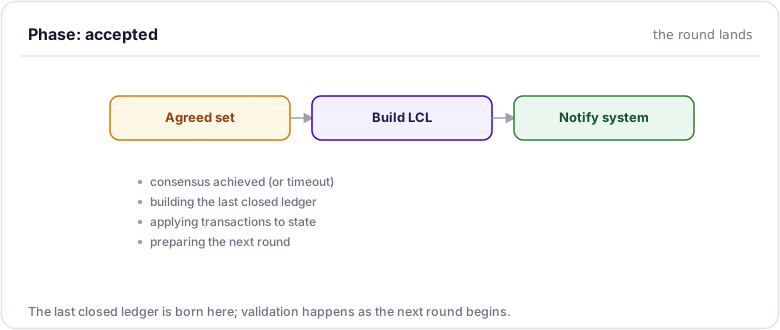
Actions:
- Build new ledger from agreed transactions
- Update ledger master with new LCL
- Process remaining transaction queue
- Begin next consensus round
Key Functions:
onAccept(): Handles consensus acceptancebuildLCL(): Constructs the Last Closed LedgerdoAccept(): Finalizes acceptance and prepares next round
Phase Transitions
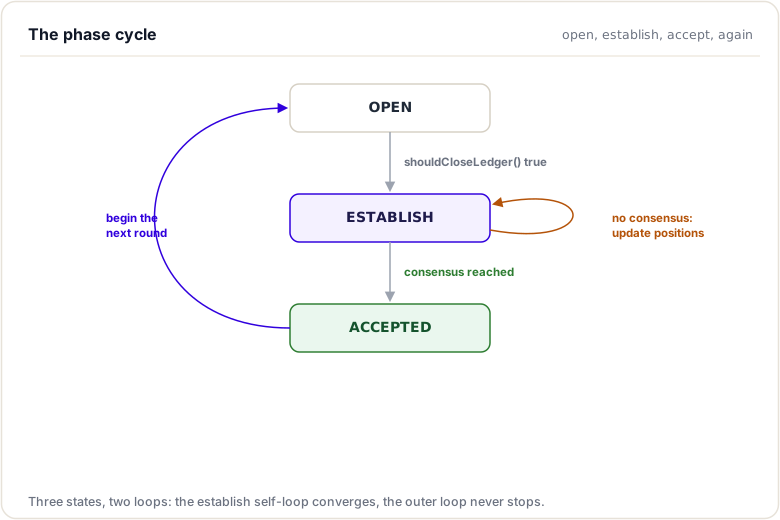
Timer-Driven Progression
The consensus process is driven by periodic timer events through the timerEntry() function.
Location: rippled/src/xrpld/consensus/Consensus.h:840-869
Actual Implementation:
void Consensus<Adaptor>::timerEntry(
    NetClock::time_point const& now,
    std::unique_ptr<std::stringstream> const& clog)
{
    // Nothing to do if we are currently working on a ledger
    if (phase_ == ConsensusPhase::Accepted)
        return;

    now_ = now;  // Update network-adjusted time

    // Check we are on the proper ledger (this may change phase_)
    auto const phaseOrig = phase_;
    checkLedger(clog);

    // If checkLedger changed our phase, return
    if (phaseOrig != phase_)
        return;

    // Execute phase-specific logic
    if (phase_ == ConsensusPhase::Open)
        phaseOpen(clog);
    else if (phase_ == ConsensusPhase::Establish)
        phaseEstablish(clog);
}
Key Steps:
- Early Exit for Accepted Phase
- If already in accepted phase, nothing to do
- Prevents unnecessary processing while building the ledger
- Update Network Time
- Sets
now_to the current network-adjusted time - Ensures all timing calculations use consistent time
- Ledger Verification (
checkLedger())
- Verifies we're working on the correct ledger
- May detect we're on the wrong ledger and switch to
WrongLedgermode - Can change the phase if ledger issues are detected
- If phase changed, exit early to handle the new phase next timer tick
- Phase-Specific Processing
- Open Phase: Calls
phaseOpen()to check if ledger should close - Establish Phase: Calls
phaseEstablish()to process consensus round
Timer Responsibilities:
- Called periodically (every
ledgerGRANULARITY= 1 second) - Advances phase when conditions met
- Detects and handles ledger synchronization issues
- Updates proposal positions during establish phase
- Checks for consensus achievement or timeouts
Consensus State Outcomes
The ConsensusState enum captures the result of consensus attempts:
enum class ConsensusState {
    No,       // No consensus reached
    MovedOn,  // Network moved on without this node
    Expired,  // Consensus timed out
    Yes       // Consensus successfully reached
};
State Implications:
| State | Meaning | Action |
|---|---|---|
| No | Insufficient agreement | Continue voting |
| MovedOn | Network ahead of this node | Resync required |
| Expired | Timeout reached | Build best-effort ledger |
| Yes | Agreement achieved | Finalize and close |
Monitoring and Debugging
JSON Serialization:
Consensus state can be serialized for monitoring:
Json::Value getJson() const {
    Json::Value ret;
    ret["phase"] = to_string(phase_);
    ret["mode"] = to_string(mode_);
    ret["proposers"] = proposerCount_;
    ret["agreements"] = agreementCount_;
    // ... additional state
    return ret;
}
RPC Access:
The consensus_info RPC provides real-time consensus status:
{
    "result": {
        "info": {
            "phase": "establish",
            "mode": "proposing",
            "proposers": 35,
            "current_ms": 2100
        }
    }
}
Summary
This module walked a single consensus round in detail, through its open, establish, and accepted phases, from collecting transactions in the open ledger to converging on a set and accepting the closed ledger. You also learned the ConsensusMode states (proposing, observing, wrong-ledger) that tell you what part your node is playing at any moment.
To remember:
- Phases of a round: open (collect transactions), establish (converge on the set), accepted (close the ledger)
ConsensusMode: proposing, observing, wrongLedger, switchedLedger- Mainnet closes a ledger roughly every 3 to 5 seconds
- During establish, agreement thresholds on disputed transactions rise round by round (avalanche to convergence)
consensus_info(admin) shows the live phase and proposer count- Timing knobs live in
ConsensusParms - Code:
src/xrpld/consensus/Consensus.h - Watch out:
wrongLedgermeans you are building on a different parent than the network; check connectivity and UNL before blaming consensus
Next up. Rounds assume every node has the ledgers; reality disagrees. Next: ledger acquisition, or how a node that fell behind catches up.
Resources
Assignments
0 of 2 complete