AMMs beyond pool creation
Interpret AMM reserves, LP-token ownership, fees, price impact, and the deposit and withdrawal modes used in production applications.
What you'll learn
- Read reserves, fee, AMM account, and LP supply from amm_info.
- Explain an LP token as a proportional claim.
- Distinguish two-asset and single-asset operations.
- Explain price impact and CLOB/AMM interaction.
Read the pool before you change it
An AMM (Automated Market Maker) is a shared pool of two assets — say XRP and TST — that quotes a price from a formula instead of from an order book. Ask amm_info and you get the whole picture of a pool: its two balances (the reserves), its trading fee, its account, and the total supply of LP tokens.
An LP token is your receipt for adding liquidity, and it stands for a share of the pool. Hold 100 of a pool's 1,000 LP tokens and you own a tenth of it; what that tenth is worth rises and falls as people trade.
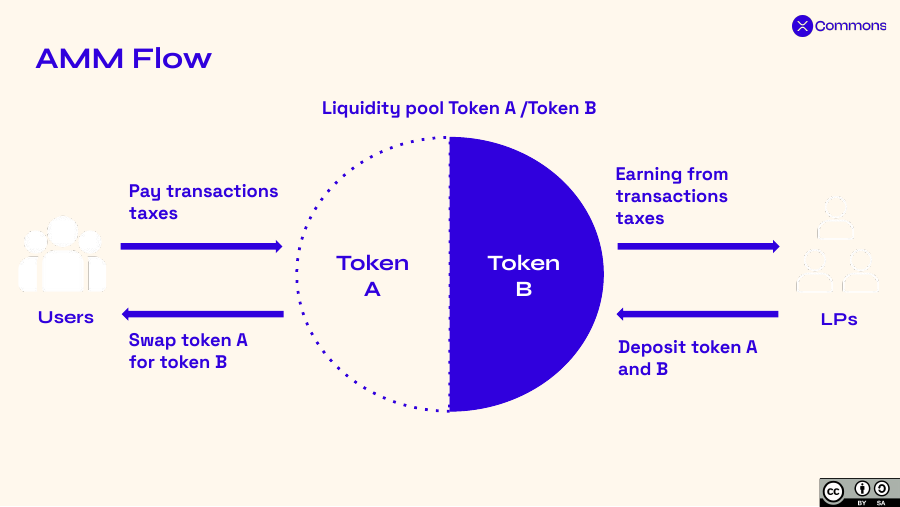
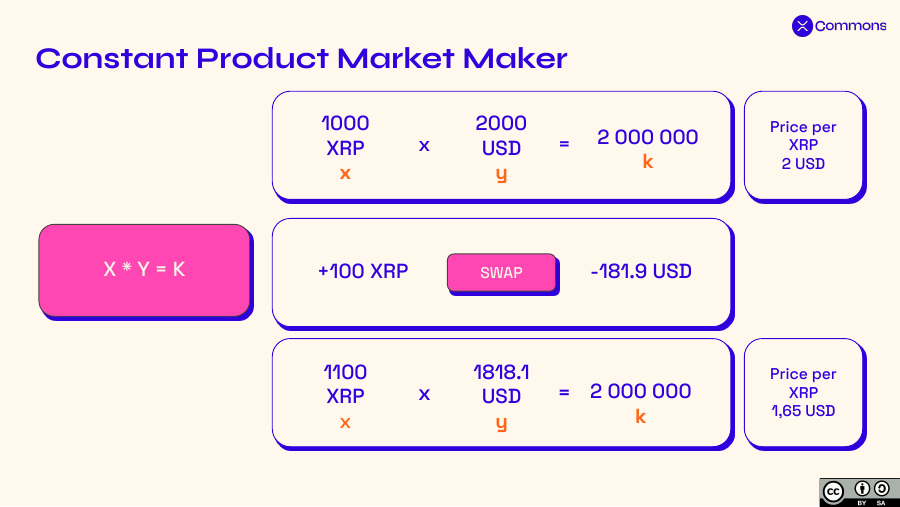
Treat the current price as a snapshot only. XRPL AMMs follow a constant-product curve, so a bigger trade earns a worse average price by pushing the two balances further apart. Fees stay in the pool and grow it. When you report a trade, compare your quote against the reserves in the validated result rather than trusting the price you started from.
Two ways to add or remove liquidity
- A two-asset (proportional) deposit adds both assets at the pool's current ratio. If the pool holds 500 XRP against 1,000 TST (1:2), you add 5 XRP and 10 TST together. The price stays put, which makes this the clearest place to begin.
- A single-asset deposit adds one asset only, tilts the ratio and the price, and pays a small fee.
Withdrawals mirror the same two modes, and a transaction flag picks which one you mean. Before you submit, call which way the balances and your LP-token count should move, then check the result against your call. Because AMM liquidity belongs to the same DEX, ordinary payments and offers tap it without any extra work.
Resources
Assignments
0 of 1 complete