
Phase overview: Extend the protocol
Your map of the Extend the protocol phase: the AMM as a worked example of a big extension, then the amendment system that activates protocol changes, in six modules.
Introduction
≈2 min · Phase overview · read this before diving in
A live, decentralized protocol cannot just ship breaking changes; it has to vote them in. This final teaching phase shows both sides of that reality: what a major protocol extension looks like in the code, and the governance machinery that switches one on.
First, a worked extension: the AMM. Two modules dissect its ledger objects, pseudo-account design, constant-product math, and its integration with pathfinding, a real, recent example of the kind of feature you could build. Then changing the rules: the amendment system's architecture (feature flags, the AmendmentTable), the lifecycle from proposal to activation, how validators vote and how the network coordinates a rollout, and how operators monitor an activation in production.
The road through this phase
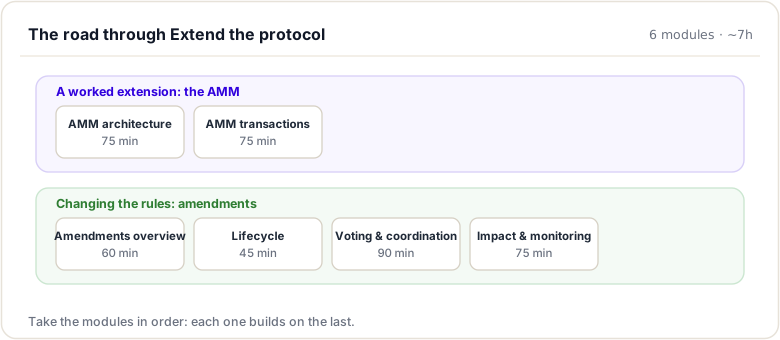
| Module | Duration | What it covers |
|---|---|---|
| A worked extension: the AMM | ||
| AMM architecture & logic | 75 min | The Automated Market Maker — pool / pseudo-account design, LP tokens, and the constant-product maths |
| AMM transactions & pathfinding | 75 min | The seven AMM transaction types and how AMM liquidity is integrated into pathfinding alongside the order book |
| Changing the rules: amendments | ||
| Amendments — overview & architecture | 60 min | How protocol upgrades work on XRPL — the amendment system, feature flags and the AmendmentTable |
| The amendment lifecycle | 45 min | The path of an amendment from introduction through majority to activation |
| Voting & network coordination | 90 min | How validators vote on amendments and how the network coordinates activation |
| Amendment impact & monitoring | 75 min | How an amendment changes transaction processing and the ledger, and how to monitor amendment status |
Total: about 7 hours of module time, plus your own exploration. The modules are ordered so each builds on the previous one; resist the temptation to skip ahead.
Where you will land
By the end of this phase you understand what it takes to ship a protocol change: gate everything behind a feature flag, survive the 80% vote, and never break consensus. The capstone that follows asks you to do exactly that, end to end.